
Product · How it works
The four-stage document lifecycle
From template to audit trail, one continuous flow inside Microsoft 365.
Every company document — SOPs, policies, contracts, procedures, work instructions, training records — moves through the same four stages: Create. Approve. Publish. Govern. The difference between a defensible document operation and a fragile one is whether those stages are an explicit process or an informal accident.
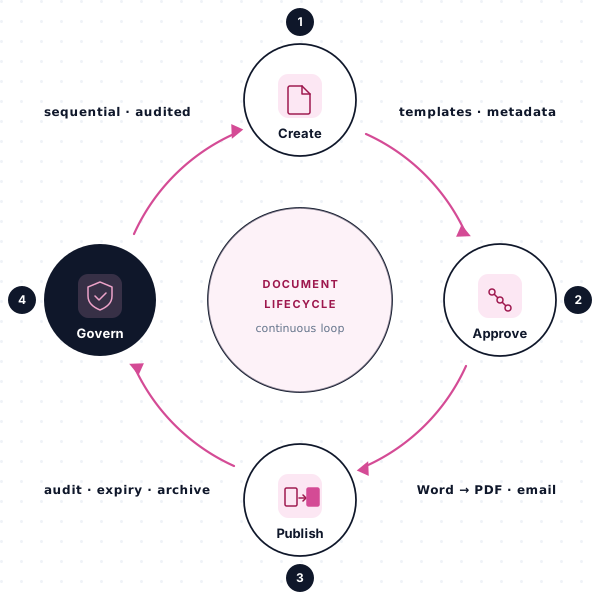
docs365.ai makes each stage explicit, automated, and auditable — all inside the Microsoft 365 tenant your team already runs. Each node in the cycle above links to a detailed walkthrough of that stage's capabilities.
Stage 1
Create
Governed templates, auto-populated version and protocol numbers, editable vs read-only metadata, real-time co-authoring in Word Online.
How creation works →Stage 2
Approve
Sequential flow with role-based routing, fixed approvers per document type, automatic check-out, complete audit log, optional DocuSign PAdES signature.
How approval works →Stage 3
Publish
Automatic Word-to-PDF conversion. Public area with only the latest approved version. Optional distribution-list email and read-receipts. Intranet surfacing.
How publication works →Stage 4
Govern
Complete audit log, versioning with full history, expiration reminders to document owners, archive (not delete), Power BI reporting.
How governance works →What you keep — and what we add
Every stage above runs on Microsoft 365. Your users keep their daily tools — Word, Outlook, Teams, SharePoint. IT keeps one identity, one security perimeter, one audit scope. No new platform to procure, deploy, train, or secure.
What we add is a governance layer on top of SharePoint: template enforcement, protocol numbering, sequential approval with audit, automatic PDF publication, expiration reminders, and the reporting that makes it all visible.
See it applied to your workflow
Thirty minutes. No cost. No obligation. We'll map your current document workflow against the four-stage lifecycle and show you exactly where the gaps are.